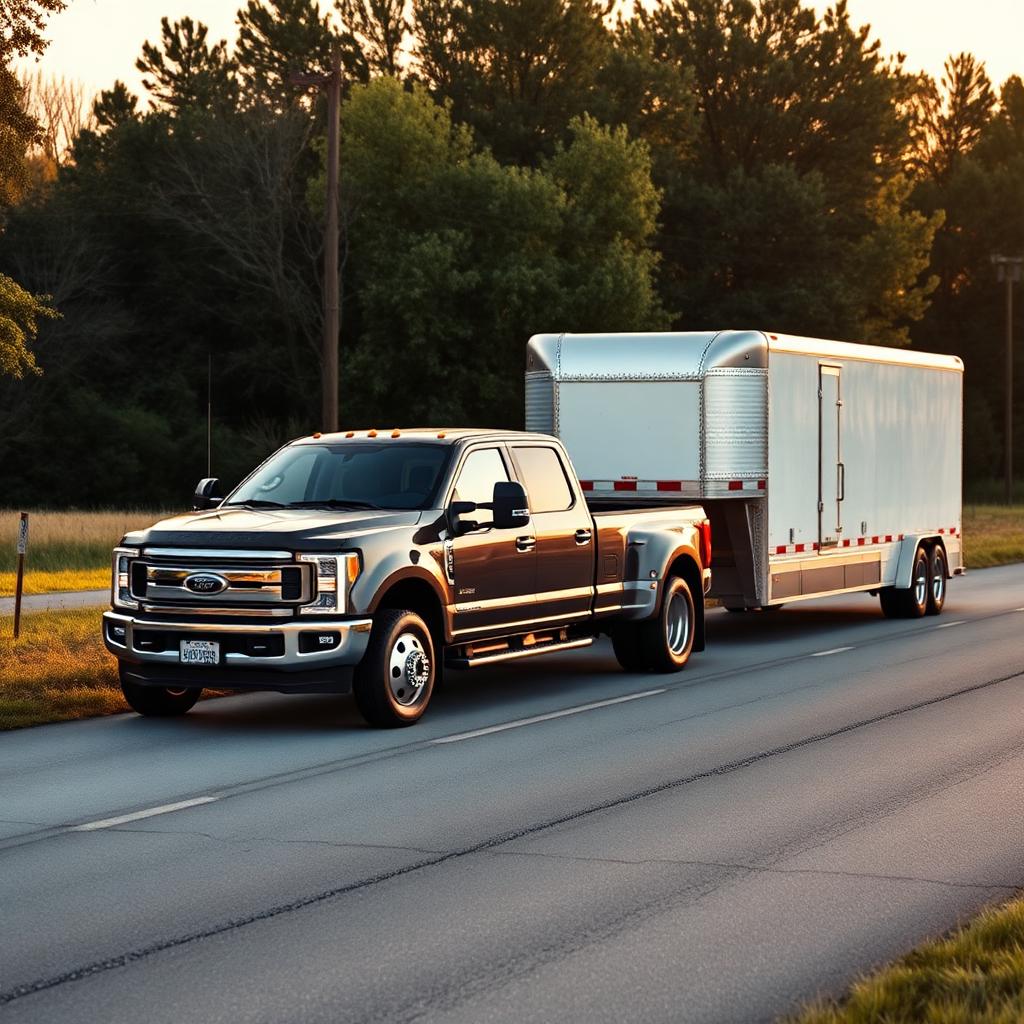
If you've spent any time around the hotshot trucking industry, you've probably heard someone say: "Just derate the trailer." For many owner-operators, derating a trailer can be a way to configure a truck-and-trailer combination that fits within common non-CDL weight-rating limits. But it's also one of the most misunderstood topics in the industry.
What Is Trailer Derating?
Derating is the process of reducing a trailer's official Gross Vehicle Weight Rating (GVWR) on its manufacturer's certification label. The important thing to understand is:
Derating does not physically change the trailer.
The frame, axles, suspension, brakes, and tires are typically the same. What changes is the certified weight rating assigned by the manufacturer and reflected on the trailer's VIN label and documentation.
Why Do People Derate a Trailer?
The most common reason is non-CDL hotshot trucking. Many non-CDL operators want to use a:
- One-ton dually pickup
- Heavy-duty deckover trailer
- Stronger frame
- Larger brakes
- Commercial-grade equipment
The challenge is that a typical one-ton dually often has a 14,000-pound GVWR. If it's paired with a trailer rated at 14,000 pounds, the combined GVWR becomes:
14,000 + 14,000 = 28,000 pounds
That combination is above the common 26,000-pound threshold many non-CDL operators aim to stay under.
The Most Common Example
Imagine you own a truck with a 14,000-pound GVWR and you want a heavy-duty trailer built with:
- Two 7,000-pound axles
- Heavy-duty frame
- Heavy-duty suspension
Instead of leaving the trailer rated at 14,000 pounds, the manufacturer may certify it at 12,000-pound GVWR. Now your combination becomes:
- Truck: 14,000 GVWR
- Trailer: 12,000 GVWR
- Combined GVWR = 26,000 pounds
That's why derating is so popular among non-CDL hotshot operators.
Can Any Trailer Be Derated?
Not always. Many manufacturers offer derating when the trailer is ordered, and some may be able to issue a revised certification label for certain trailers after the sale. Policies vary by manufacturer, so you'll need to ask the dealer or manufacturer directly.
How Does the Process Usually Work?
While every manufacturer has its own procedures, the process often looks like this:
- Order the trailer with a lower GVWR, or contact the manufacturer to ask whether the trailer is eligible for derating.
- If approved, the manufacturer issues updated certification paperwork and/or a new VIN certification label reflecting the lower GVWR.
- Install or receive the updated certification per the manufacturer's instructions and keep all supporting documentation with your records.
You should never create or alter a certification label yourself.
Does Derating Make the Trailer Weaker?
No. In most cases, the trailer's physical construction doesn't change. Many derated trailers still have:
- Heavy-duty frames
- Commercial axles
- Electric brakes
- Heavy-duty suspension
- High-capacity tires
The official certified GVWR is what changes — not the engineering of the trailer.
Important Things to Remember
Derating does not mean you can ignore the trailer's certified GVWR. You should always:
- Stay within the trailer's certified GVWR
- Stay within your truck's GVWR
- Stay within axle ratings (GAWR)
- Stay within tire load ratings
- Stay within your hitch rating
- Follow all applicable federal and state regulations
A lower certification label doesn't authorize overloading the trailer.
Should You Derate a Trailer?
It depends on your business goals. Derating may make sense if you:
- Plan to operate a non-CDL hotshot business
- Want a heavy-duty trailer while targeting a 26,000-pound combined GVWR
- Need a stronger trailer without moving into a different licensing category
If you expect to haul heavier freight regularly, obtaining a CDL and using a higher-rated trailer may be the better long-term option.
Financing your hotshot trailer?
Get pre-qualified in under five minutes for a deckover, gooseneck, or equipment trailer. Soft credit inquiry — no impact to your score.
Get Pre-qualifiedFrequently Asked Questions
Is derating legal?
It can be when it's done in accordance with the manufacturer's procedures and applicable laws. Simply changing a sticker yourself is not the same as a manufacturer-approved derating.
Can I derate a trailer after I buy it?
Sometimes. Some manufacturers may offer this service for eligible trailers, while others do not. Contact the manufacturer or an authorized dealer to find out what's available.
Why do hotshot truckers derate trailers?
Many non-CDL operators want to pair a one-ton dually with a heavy-duty trailer while keeping the combination within common non-CDL weight-rating limits. A manufacturer-approved derating can make that possible in some cases.
Final Thoughts
Trailer derating has become a popular topic in the hotshot industry because it allows some operators to purchase a stronger, commercial-grade trailer while configuring their truck-and-trailer combination for a non-CDL operation. The key is doing it correctly. Always work with the trailer manufacturer or an authorized dealer, understand your truck's ratings, and follow all applicable federal and state regulations before hitting the road.
Looking for the Right Hotshot Trailer?
At WeFinanceTrailers.com, we help owner-operators explore financing options for:
- Deckover trailers
- Gooseneck trailers
- Equipment trailers
- Flatbed trailers
- Tilt trailers
- Car haulers
If you're shopping for a trailer and have questions about GVWR, derating, or choosing the right setup for your operation, we're here to help.
Get Pre-qualified Financing not guaranteed. Options depend on the applicant and the purchase.