Why Trailer Financing Is a Growing Lending Opportunity
How a fragmented $30B+ market and rising small-business demand are opening the door for equipment finance lenders, banks, and credit unions.
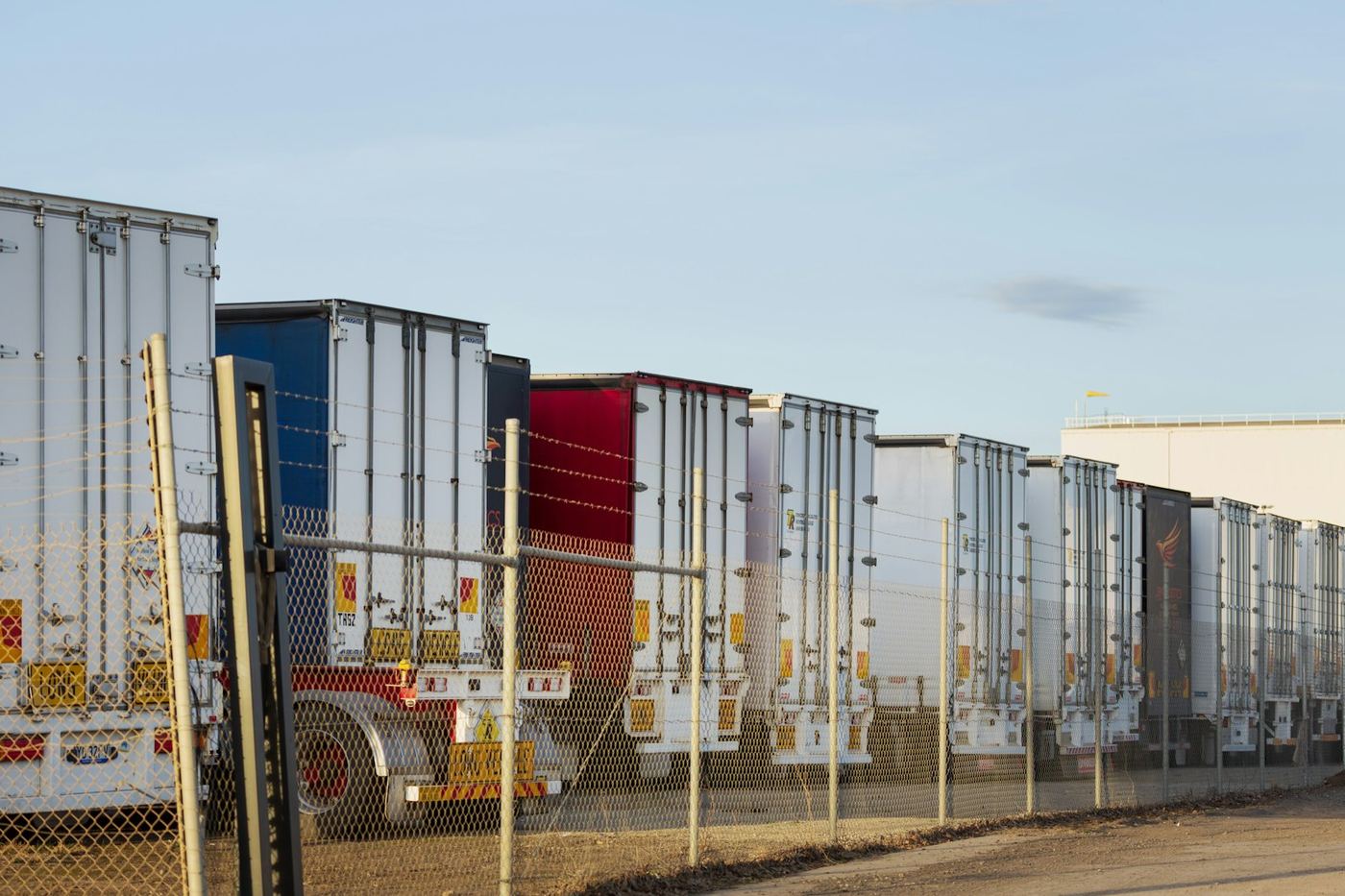
A quietly enormous market hiding in plain sight
Trailers are one of the most under-covered segments in U.S. equipment finance. The category spans everything from $6,000 utility trailers hauled behind a half-ton pickup to $120,000 commercial goosenecks and enclosed car haulers financed like any other piece of business equipment. Add it up across dealers, private-party sales, and manufacturer direct channels, and trailer sales in the United States clear well over $30 billion a year — with financing penetration climbing every year as buyers shift away from cash purchases.
Despite that scale, trailer financing has historically been treated as an afterthought inside larger equipment finance portfolios. Most national lenders lead with trucks, construction equipment, and medical assets. Trailers are frequently lumped into a generic 'other' bucket, underwritten with off-the-shelf commercial credit boxes, and declined at rates that would be unacceptable in any other vertical. That gap is the opportunity.
Small-business demand is the growth engine
The buyers driving the growth are working small-business owners: landscapers, contractors, roofers, hotshot truckers, farmers, food-truck operators, mobile detailers, equipment rental startups, and specialty haulers. For each of these operators a trailer isn't a lifestyle purchase — it's a revenue-producing tool that pays for itself in weeks. Demand for that kind of capex is remarkably resilient across the credit cycle.
The Small Business Administration reports a multi-year surge in new business formations, and the fastest-growing segments — home services, logistics, and specialty trades — are exactly the customers who need trailers. When we survey applicants on WeFinanceTrailers.com, roughly two-thirds identify as business-purpose buyers, and a growing share are sub-two-year startups that generalist equipment lenders won't touch. That segment alone represents billions in fundable annual originations for lenders willing to build a program around it.
Why the market is fragmented — and why that matters
Unlike auto lending, trailer financing has no dominant national player. Volume is scattered across specialty equipment finance companies, regional banks, credit unions, a handful of manufacturer captives, and consumer installment lenders that will finance smaller utility trailers. No single institution sees the full applicant flow, and buyers routinely apply to three or four lenders before finding one whose credit box actually fits their file.
For lenders, fragmentation is a two-sided coin. On one side, it means there's no incumbent to displace — a well-designed program can capture meaningful market share within a year. On the other, it means applicant acquisition is the bottleneck. The lenders winning today aren't the ones with the cheapest rate sheet; they're the ones plugged into origination channels that pre-qualify, tag, and route applicants to a program that actually matches their profile.
Digital origination has finally reached this vertical
For years, trailer buyers financed at the dealership by paper application or by cold-calling banks one at a time. That's changed quickly. Buyers now expect a single online form, a soft-pull decision inside 24 hours, and DocuSign closings. Dealers expect the same on the F&I side — a portal that returns approvals in minutes, not days.
This shift favors lenders with modern intake, automated stipulation collection, and API-friendly workflows. It disadvantages institutions still requiring wet signatures, paper bank statements, or manual dealer buy-outs. Any lender modernizing origination in 2026 will out-fund a competitor with better pricing but a 1990s workflow — because the borrower will simply take the first funded offer.
Underwriting spans a wider credit spectrum than most assume
One misconception that keeps lenders out of the vertical is that trailer buyers are a subprime population. The data doesn't support that. A meaningful share of applicants are prime-credit business owners (700+ FICO) with two-plus years in business and clean bank statements — files that fit any prime equipment finance program. An even larger share are near-prime and startup borrowers (640–699 FICO, under two years TIB) who don't fit prime-only programs but represent excellent risk when underwritten with three months of bank statements plus a personal guarantee.
Consumer buyers financing horse trailers, toy haulers, and utility trailers add another dimension — these files behave more like powersports or auto paper and are best served by consumer installment programs, not commercial equipment programs. A lender who can plug into the right slice of the credit spectrum — prime business, startup business, consumer prime, subprime, or private-party — will see fund-through rates dramatically higher than a generalist bank running a single credit box against every application.
What this means for equipment finance companies, banks, and credit unions
For equipment finance companies, trailer financing is now large enough and modern enough to justify a dedicated program — with its own credit box, stip list, and dealer/private-party workflow — rather than treating it as overflow from truck or construction programs.
For community banks and credit unions, trailers are one of the few remaining commercial lending categories where a well-run local institution can win against national competitors. The loan sizes are attractive ($15k–$75k average), the collateral is titled and easy to value, and the borrowers are exactly the small-business members these institutions were built to serve.
For private and specialty lenders, the fragmentation and geographic spread of demand — every state produces meaningful monthly volume — create a durable niche that isn't dependent on any single dealer relationship or manufacturer captive.
How WeFinanceTrailers.com fits in
We generate nationwide trailer financing demand and route each applicant to the lender whose program actually fits: prime business, startup business, consumer prime, subprime, or private-party. Rather than blasting every application to every partner, we match by state, credit range, business tenure, trailer type, and seller type — which is why our lending partners consistently report higher fund-through rates than typical broker or lead-aggregator flow.
If your institution finances trailer purchases and you'd like to be part of that routing, our partnerships team is happy to walk through your program's fit.